

Technological Mediation, Platform Constraints, and Digital-System Interaction
Examining how digital platforms, algorithmic systems, surveillance technologies, and persistent online exposure reshape the operational conditions of structured naturist systems.
The future of structured naturist systems depends on their ability to function coherently across both physical and digital environments while maintaining integrity despite the loss of contextual control within technological systems.
6.1 The Structural Role of Technology in Contemporary Naturism
Technological systems are no longer peripheral to naturist participation. They constitute a primary layer through which visibility, communication, perception, and regulation are mediated.
Key technological domains influencing naturist systems include social media platforms, content moderation algorithms, mobile recording devices, data storage and distribution systems, and surveillance infrastructure.
These systems reshape naturism in two fundamental ways. They extend reach and visibility beyond physical environments, and they impose external constraints independent of naturist intent or governance.
As a result, naturism now operates within a dual-layer system consisting of physical environments governed by context and behaviour, and digital environments governed by platform rules and algorithmic interpretation.
The interaction between these layers introduces structural tensions that cannot be resolved through traditional approaches.
6.2 Platform Governance Versus Context-Based Interpretation
Digital platforms operate under governance models that differ significantly from legal or social frameworks.
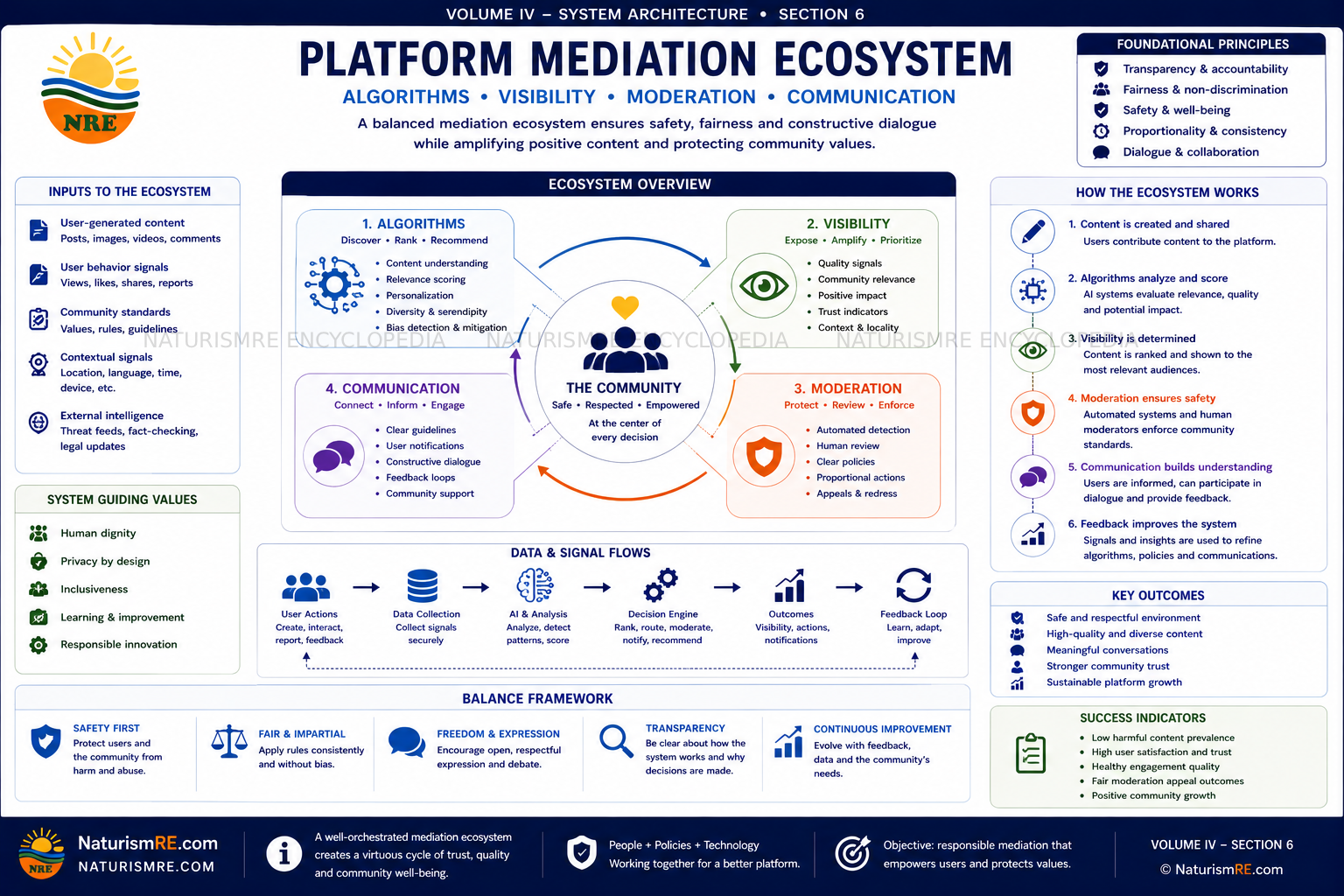
Platform moderation typically relies on visual detection systems, standardised policy enforcement, and risk-averse content filtering. These systems prioritise scalability, liability reduction, and consistency across global user bases.
However, they exhibit structural limitations. They have limited capacity to interpret context or intent, struggle to distinguish between non-sexual and sexualised nudity, and tend to favour precautionary removal over contextual evaluation.
This creates a fundamental misalignment. Naturist systems rely on context, intent, and behaviour, whereas platforms operate on visual cues and risk minimisation.
As a result, even well-governed, non-sexual environments may be restricted, deprioritised, or removed.
This constraint is structural rather than temporary.
6.3 Algorithmic Amplification and Visibility Distortion
Digital platforms do not merely restrict content. They actively shape visibility through algorithmic amplification.
Engagement Prioritisation
Content is amplified based on interaction intensity rather than contextual accuracy or representativeness.
Controversy Bias
Ambiguous or controversial material may receive disproportionate visibility compared to structured educational content.
Visibility Distortion
The most visible content may not accurately represent the operational reality of naturist systems.
Perception Shaping
Algorithmic systems influence public understanding through selective amplification and suppression.
Algorithmic dynamics therefore influence both visibility and public perception of naturism.
6.4 The Persistence and Irreversibility of Digital Exposure
A defining characteristic of digital systems is the persistence of captured content.
Once recorded and distributed, content may be stored indefinitely, detached from its original context, and redistributed without control or consent.
For naturist environments, this introduces several risks, including misinterpretation when viewed outside its original setting, reputational exposure from incomplete or outdated representations, and loss of control over participant visibility.
Unlike physical environments, where context is immediate, digital environments frequently present fragmented or decontextualised representations.
Structured systems must therefore operate on the assumption that recording is possible, distribution may occur beyond intended audiences, and contextual integrity cannot be preserved once content enters digital circulation.
6.5 Surveillance and the Erosion of Contextual Privacy
In addition to voluntary recording, the expansion of surveillance infrastructure further alters participation conditions.
This includes public and private monitoring systems, automated observation technologies, and data aggregation across platforms.
These conditions reduce expectations of contextual privacy, introduce the possibility of recording without awareness, and increase sensitivity to location and environmental design.
Surveillance does not prevent naturist activity, but it modifies risk perception, participant behaviour, and site viability.
Structured environments must therefore incorporate awareness of surveillance into their design and operational considerations.
6.6 Digital Representation and Narrative Control Limitations
The ability to shape or control narratives in digital environments is inherently limited.
Constraints include platform ownership and policy control, user-generated content beyond organisational oversight, and rapid dissemination of incomplete or inaccurate information.
As a result, structured naturist systems cannot rely on digital channels for accurate representation. Positive narratives may be overshadowed by isolated or misinterpreted events, and corrective communication may have limited reach or delayed effect.
This creates a condition in which digital perception may diverge significantly from operational reality, and system credibility may be influenced by external narratives beyond direct control.
Mitigation requires resilience to narrative variability rather than attempts at direct control.
6.7 Adaptive Strategies Within Technological Constraints
Given the structural limitations of digital systems, naturist environments must adopt adaptive strategies rather than attempting direct alignment.
Low-Risk Communication Design
Content strategies minimise reliance on imagery likely to trigger automated moderation systems.
Platform-Compatible Operation
Communication channels are maintained by operating within platform policy limitations where possible.
Distributed Communication Systems
Multi-platform approaches reduce dependency on individual platforms and single-channel exposure.
Participant Awareness
Individuals are informed about recording, distribution, and long-term digital exposure risks.
Structural Prioritisation
Long-term operational integrity is prioritised over short-term digital visibility or validation.
These strategies do not eliminate technological constraints. They enable systems to function effectively despite them.
6.8 Analytical Conclusion
Technological systems introduce a parallel governance layer that operates independently of legal frameworks, social norms, and naturist intent.
Digital platforms prioritise risk minimisation over contextual interpretation. Algorithmic systems distort visibility and representation. Digital exposure is persistent and often irreversible. Surveillance reduces contextual privacy and influences participation conditions. Narrative control in digital environments remains inherently limited.
As a result, naturist systems must recognise technology as a structural constraint, design environments resilient to decontextualisation, adapt communication strategies to platform realities, and reduce reliance on digital validation for legitimacy.
The interaction between naturism and technology does not suggest incompatibility. It defines the conditions under which naturism must operate.
This establishes a defining principle:
The future of structured naturist systems depends on their ability to function coherently across both physical and digital environments while maintaining integrity despite the loss of contextual control within technological systems.
Primary Supporting Articles
Hybrid Systems, Digital and Physical Integration
Bias Reduction Through System Design Rather Than Algorithmic Correction
Global Data Infrastructure for Behavioural Systems