

Canterbury-Bankstown swimming-pool changing rooms
Facts, correspondence, council policy and NRE's formal request for the complaints relied upon in the decision.
Canterbury-Bankstown : vestiaires et douches des piscines municipales
Faits, correspondance, décision municipale et demande officielle de NRE concernant les plaintes invoquées à l'appui de cette décision.
The central issue: Changing rooms and communal showers exist for changing, washing and personal hygiene. Ordinary non-sexual nudity should not automatically be equated with misconduct.
NRE supports safeguarding, privacy and respectful behaviour. We also believe council decisions affecting bodily autonomy should be proportionate and supported by evidence.
La question centrale : Les vestiaires et douches collectifs servent à se changer, se laver et assurer son hygiène. La nudité ordinaire et non sexuelle ne doit pas être automatiquement assimilée à un comportement répréhensible.
NRE défend la protection des personnes, la vie privée et le respect d'autrui. Nous estimons également que les décisions municipales touchant à l'autonomie corporelle doivent être proportionnées et fondées sur des éléments concrets.
1. Latest development: Formal GIPA request lodged
22 November 2026: NaturismRE emailed Canterbury-Bankstown Council a narrowly scoped application under the NSW Government Information (Public Access) Act 2009 (GIPA Act). It seeks only the specific complaint or complaints, including any existing record of a verbal complaint, relied upon for the council's 17 November decision concerning towel-use signage in shared changing and shower facilities.
The application refers to Mayor Bilal El-Hayek's interview on 2GB radio to identify the issue. It expressly excludes broad historical searches and unrelated matters, and requests redaction of complainants' personal details.
Council acknowledged receipt on 22 November. That automated acknowledgement is not confirmation that the application has been formally accepted as valid. Payment instructions and disclosure of the requested records remain outstanding.
1. Dernière évolution : dépôt d'une demande GIPA
22 novembre 2026 : NaturismRE a transmis au conseil municipal de Canterbury-Bankstown une demande ciblée en vertu du Government Information (Public Access) Act 2009 (GIPA Act) de Nouvelle-Galles du Sud. Elle vise uniquement la ou les plaintes précises, y compris toute trace écrite existante d'une plainte verbale, sur lesquelles le conseil s'est appuyé pour sa décision du 17 novembre relative aux panneaux concernant l'utilisation de serviettes dans les vestiaires et douches collectifs.
La demande fait référence à l'interview du maire Bilal El-Hayek sur la radio 2GB afin d'identifier le sujet. Elle exclut les recherches historiques générales et les questions sans rapport, et demande l'occultation des données personnelles des plaignants.
Le conseil a accusé réception le 22 novembre. Cet accusé de réception automatique ne constitue pas une confirmation de la validité formelle de la demande. Les instructions de paiement et la communication des documents sont toujours attendues.
22 November 2026
22 novembre 2026
Automated council response, 22 November.
Réponse automatique du conseil, 22 novembre.
Formal validation and fee instructions pending.
Validation formelle et modalités de paiement en attente.
2. Background: Mayor's 2GB interview
On 17 November 2026, before that evening's council meeting, Mayor Bilal El-Hayek discussed a proposed changing-room motion with Ben Fordham on 2GB. The interview concerned communal changing and shower areas at council aquatic centres, not a specific independently verified incident.
“I've been approached by members of the community, particularly mothers, that are concerned by the full frontal nudity in some of our common areas in our change rooms and showers.”
He acknowledged that people need to shower after swimming but argued that people moving through common areas should cover themselves with towels. He described the proposal as investigating appropriate signage.
In the interview, the Mayor did not identify the complainants, give a complaint count, or describe a completed investigation into the concerns. The transcript alone does not establish what written or recorded complaints Council held or relied upon. That is the narrow question addressed by NRE's GIPA request.
The Mayor also discussed recording-enabled smart glasses and swimwear. Those are separate issues and are not the subject of this records request.
Source: transcript of the Mayor's 2GB interview supplied to NaturismRE. Short quotation reproduced for identification and public-policy analysis. The interview statements are attributed to the Mayor; they are not presented as independently verified findings.
2. Contexte : entretien du maire sur 2GB
Le 17 novembre 2026, avant la séance du conseil municipal prévue le soir même, le maire Bilal El-Hayek a évoqué avec Ben Fordham, sur 2GB, une motion concernant les vestiaires. L'entretien portait sur les espaces collectifs de change et de douche dans les centres aquatiques municipaux, et non sur un incident particulier vérifié de manière indépendante.
« Des membres de la communauté, notamment des mères, m'ont fait part de leurs préoccupations concernant la nudité intégrale dans certains espaces communs de nos vestiaires et de nos douches. »
Le maire a reconnu la nécessité de se doucher après la baignade, tout en estimant que les personnes circulant dans les espaces communs devraient se couvrir d'une serviette. Il a présenté la motion comme une démarche visant à étudier la mise en place de panneaux appropriés.
Dans cet entretien, le maire n'a pas identifié les plaignants, précisé le nombre de plaintes ni décrit une enquête achevée concernant ces préoccupations. La transcription ne permet pas, à elle seule, d'établir quelles plaintes écrites ou consignées étaient détenues ou invoquées par le conseil. C'est précisément l'objet de la demande GIPA ciblée de NRE.
Le maire a également évoqué les lunettes permettant d'enregistrer des images et les tenues de bain. Il s'agit de sujets distincts, exclus de la présente demande.
Source : transcription de l'entretien du maire sur 2GB communiquée à NaturismRE. Traduction française de la citation à titre informatif. Les déclarations sont attribuées au maire et ne constituent pas des faits vérifiés de manière indépendante.
3. What Council actually decided
At its ordinary meeting on 17 November 2026, Canterbury-Bankstown Council considered Item 11.9 on respect in shared changing rooms and adopted Resolution 797.
Summary of the adopted resolution
- Recognise the importance of comfortable, respectful and welcoming shared changing rooms.
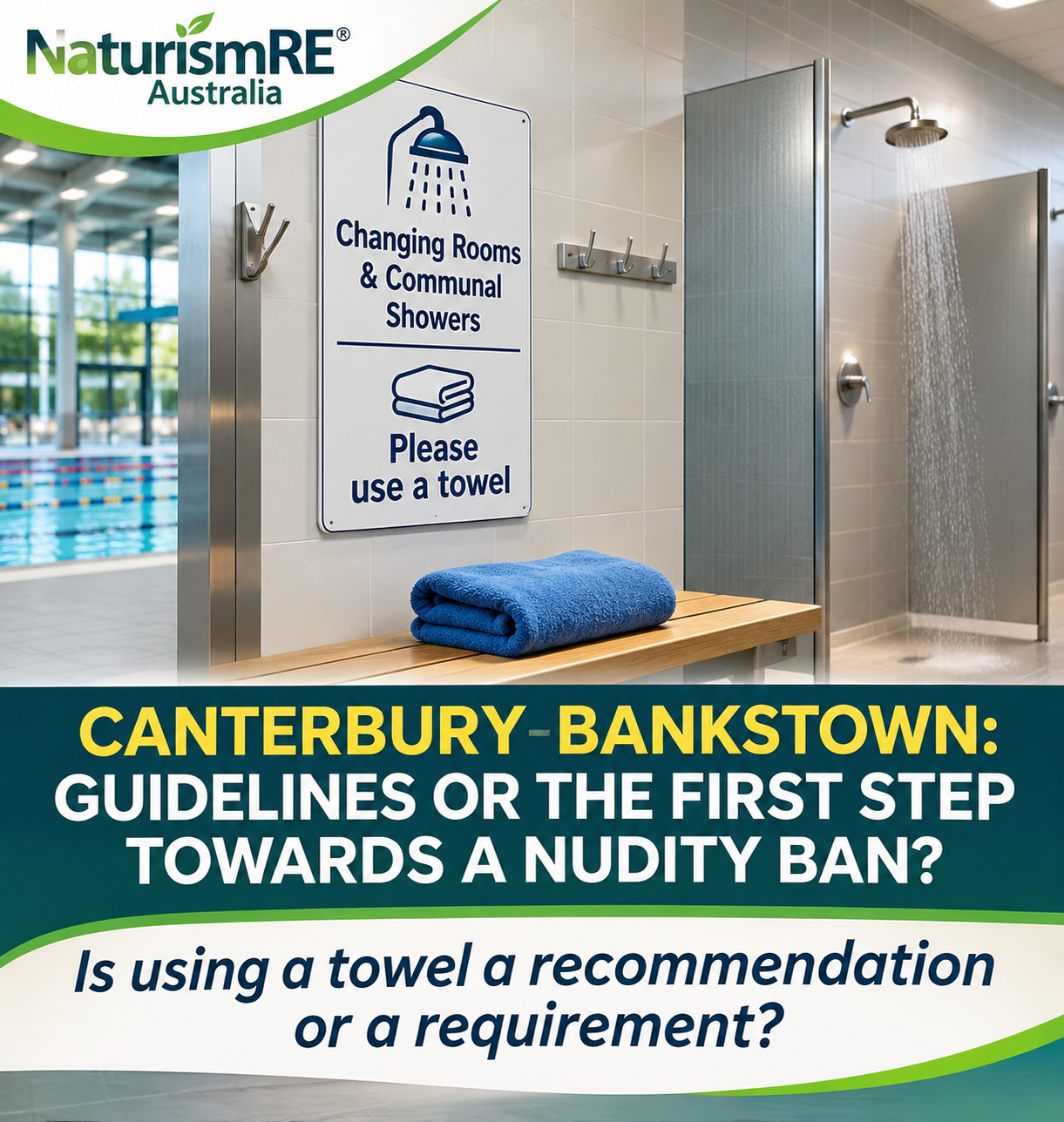
- Investigate signage encouraging privacy, discretion and towel use in communal areas where practical.
- Review existing conditions of entry and behavioural guidelines to promote courtesy and privacy.
An amendment requiring a further report back to Council was defeated. The original motion was carried as Resolution 797. The published minutes record the amendment division but do not establish that a towel requirement or penalties were enacted.
3. Ce que le conseil a réellement décidé
Lors de sa séance ordinaire du 17 novembre 2026, le conseil municipal de Canterbury-Bankstown a examiné le point 11.9 relatif au respect dans les vestiaires collectifs et adopté la résolution 797.
Résumé de la résolution adoptée
- Reconnaître l'importance de vestiaires collectifs accueillants, confortables et respectueux.
- Étudier la mise en place de panneaux encourageant la discrétion, le respect de la vie privée et l'utilisation d'une serviette dans les espaces collectifs lorsque cela est possible.
- Réexaminer les conditions d'accès et les règles de comportement existantes afin de promouvoir la courtoisie et le respect de la vie privée.
Un amendement prévoyant un rapport complémentaire au conseil a été rejeté. La motion initiale a été adoptée sous le numéro 797. Le procès-verbal ne démontre pas qu’une obligation de se couvrir d’une serviette ou de nouvelles sanctions ont été instaurées.
The resolution did not prohibit ordinary changing-room nudity.
La résolution n'interdit pas la nudité ordinaire dans les vestiaires.
No new offences or penalties were established.
Aucune nouvelle infraction ni sanction n'a été instaurée.
The wording and implementation were not settled.
Le libellé et les modalités d'application restent à définir.
4. NaturismRE's response
On 19 November 2026, NRE contacted Mayor Bilal El-Hayek and Canterbury-Bankstown Council to request clarification, provide five preliminary recommendations and offer educational and policy resources.
4. Réponse de NaturismRE
Le 19 novembre 2026, NRE a contacté le maire Bilal El-Hayek et le conseil municipal pour demander des précisions, formuler cinq recommandations préliminaires et proposer des ressources pédagogiques et de politique publique.
Separate ordinary nudity from inappropriate behaviour.
Différencier la nudité ordinaire des actes inappropriés.
Practical safeguarding and privacy measures for all ages.
Des mesures concrètes de sécurité et de confidentialité pour tous les âges.
Private changing facilities for those who prefer them.
Des cabines individuelles pour les personnes qui le souhaitent.
Clear conduct rules without stigmatising the body.
Des règles de comportement sans stigmatisation du corps.
Proportionate, understandable and consistent restrictions.
Des restrictions proportionnées, compréhensibles et cohérentes.
NRE sought clarification before any detailed policy submission.
NRE a demandé des précisions avant toute proposition détaillée.
5. Original email to Council, 19 November 2026
The substantive English text of the original correspondence is reproduced below. The French version is an informational translation, not a second email.
5. Courriel initial au conseil, 19 novembre 2026
Le texte original anglais est conservé. La version française ci-dessous est une traduction informative et non un second courriel envoyé.
19 November 2026 | 19 novembre 2026
From / Expéditeur: [email protected]
To / Destinataire: Mayor Bilal El-Hayek
Cc: Canterbury-Bankstown Council
Subject: Enquiry regarding proposed aquatic centre changing-room policy | NaturismRE
Objet (original) : Enquiry regarding proposed aquatic centre changing-room policy | NaturismRE
Dear Mayor El-Hayek and Canterbury-Bankstown Council,
I am writing on behalf of NaturismRE (NRE) regarding recent public reporting about possible restrictions on nudity in swimming-pool changing rooms within the Canterbury-Bankstown local government area.
We recognise the importance of protecting children's safety, privacy and wellbeing, and ensuring aquatic facilities remain welcoming and comfortable for all visitors.
It is important, however, to distinguish ordinary nudity associated with changing clothes, showering or personal hygiene from inappropriate, sexual, intimidating or deliberately offensive behaviour. These circumstances should not be treated as interchangeable.
NaturismRE has developed the proposed Naturist Integrity & Cultural Protection Act (NICP Act), an adaptable legislative framework addressing this distinction through clearer definitions, appropriate safeguards and proportionate regulation.
We encourage Council to consider an approach that:
- Distinguishes ordinary changing-room nudity from inappropriate conduct.
- Protects children and other visitors through practical privacy and safeguarding measures.
- Provides private changing options for individuals and families who prefer them.
- Establishes clear behavioural expectations without unnecessarily stigmatising the human body.
- Ensures restrictions are proportionate, understandable and consistently applied.
Could Council please clarify whether a changing-room policy is being developed or considered, and whether a draft or consultation process is available?
NRE would welcome the opportunity to contribute relevant educational resources and policy guidance if Council is examining this issue. Our objective is to support safeguarding while ensuring measures address inappropriate behaviour rather than ordinary human nudity.
Further information: https://www.naturismre.com/complete-guide-to-the-nicp-act
Thank you for your consideration. We look forward to your clarification.
Kind regards,
Madame, Monsieur, Monsieur le Maire El-Hayek,
Je vous écris au nom de NaturismRE (NRE) à la suite de récentes informations de presse concernant d'éventuelles restrictions de la nudité dans les vestiaires des piscines situées sur le territoire de Canterbury-Bankstown.
Nous reconnaissons l'importance de protéger la sécurité, la vie privée et le bien-être des enfants et de veiller à ce que les installations aquatiques soient accueillantes et confortables pour tous.
Il importe toutefois de distinguer la nudité ordinaire liée au changement de vêtements, à la douche ou à l'hygiène personnelle des comportements inappropriés, sexuels, intimidants ou délibérément offensants. Ces situations ne doivent pas être confondues.
NaturismRE a élaboré une proposition de cadre législatif adaptable, le Naturist Integrity & Cultural Protection Act (NICP Act), qui vise à clarifier cette distinction par des définitions précises, des protections adaptées et une réglementation proportionnée.
Nous encourageons le conseil à envisager une approche qui :
- Distingue la nudité ordinaire dans les vestiaires des comportements inappropriés.
- Protège les enfants et les autres usagers par des mesures concrètes de confidentialité et de sécurité.
- Offre des espaces de change privés aux personnes et familles qui les préfèrent.
- Définit clairement les comportements attendus sans stigmatiser inutilement le corps humain.
- Garantit que les restrictions soient proportionnées, compréhensibles et appliquées de manière cohérente.
Le conseil pourrait-il préciser si une politique concernant les vestiaires est à l'étude ou en préparation, et si un projet de texte ou une consultation est prévu ?
NRE serait heureux de contribuer des ressources éducatives et des orientations de politique publique si le conseil examine cette question. Notre objectif est de soutenir la protection des usagers tout en veillant à ce que les mesures ciblent les comportements inappropriés plutôt que la nudité humaine ordinaire.
Informations complémentaires : https://www.naturismre.com/complete-guide-to-the-nicp-act
Merci de votre attention. Nous attendons vos précisions.
Cordialement,
Vincent Marty
Founder, NaturismRE (NRE)
[email protected]
www.naturismre.com
The signature above identifies the sender; the body is reproduced from the original correspondence supplied by NRE.La signature ci-dessus identifie l'expéditeur ; le corps du message provient de la correspondance initiale fournie par NRE.
6. Official GIPA correspondence and evidence
The two source documents are presented as separate records. The application proves what NRE requested; the automated reply proves receipt, not approval or release of documents.
6. Correspondance officielle GIPA et pièces justificatives
Les deux documents sont présentés séparément. La demande atteste des documents sollicités par NRE ; la réponse automatique atteste de sa réception, non de son acceptation formelle ni de la communication des pièces.
Document A: NRE's formal GIPA requestDocument A : demande GIPA de NRE
22 November 2026
Sent to [email protected]. Limited to the specific complaint records relied upon for the 17 November decision; requests privacy redactions and advance notice of additional processing costs.
Envoyée à [email protected]. Limitée aux plaintes invoquées pour la décision du 17 novembre ; demande l'occultation des données personnelles et une estimation préalable des frais supplémentaires.
View original PDF (English)Consulter le PDF original (anglais)
Document B: Council receipt acknowledgementDocument B : accusé de réception du conseil
22 November 2026
Automated acknowledgement that council received the email and would refer it to the appropriate team. It does not confirm formal GIPA validation.
Accusé de réception automatique indiquant que le conseil a reçu le courriel et le transmettra au service compétent. Il ne confirme pas la validation formelle de la demande GIPA.
View original PDF (English)Consulter le PDF original (anglais)
7. Nudity is not misconduct
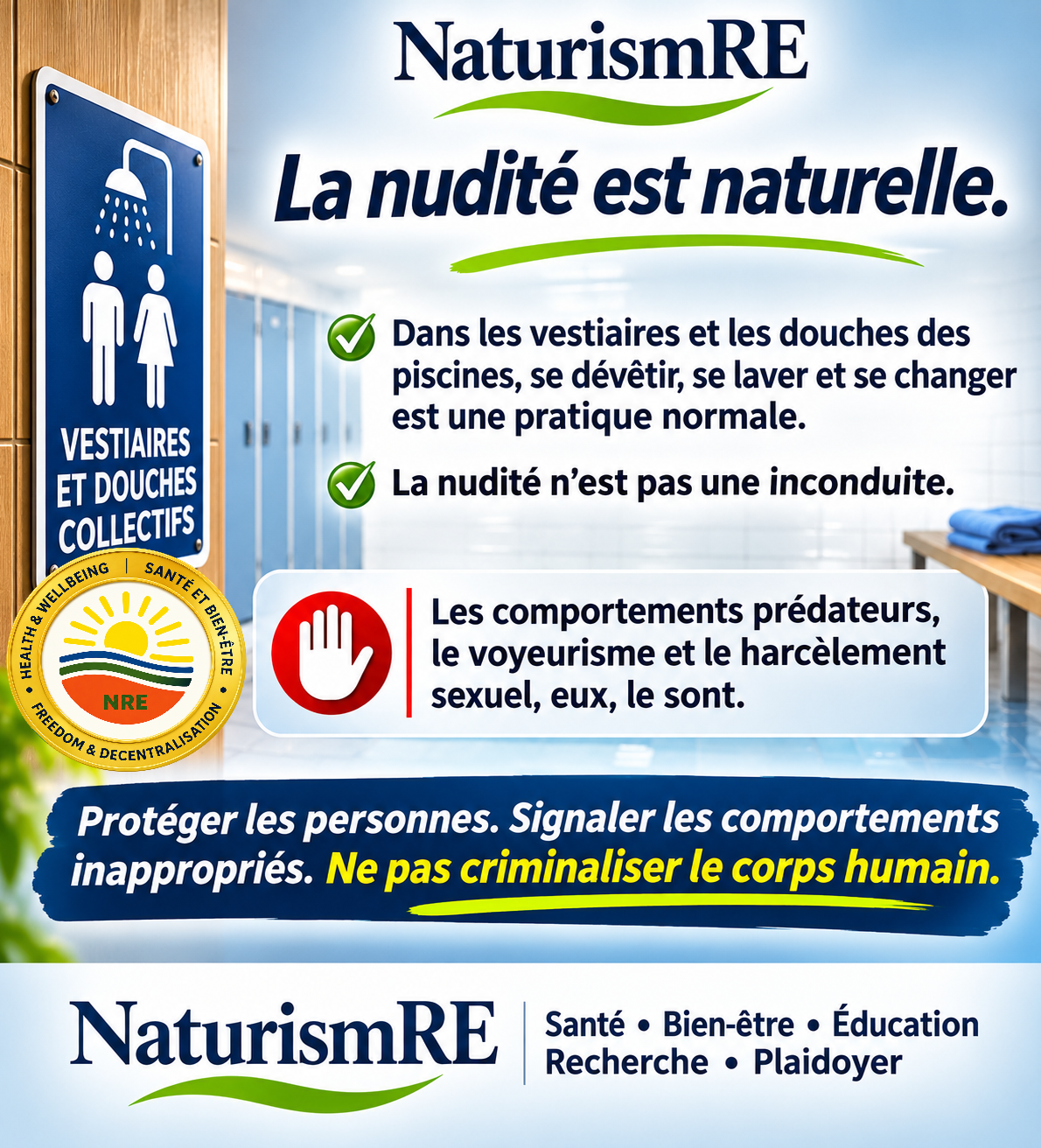
Communal changing facilities are places where visitors may reasonably expect to encounter people changing, showering and drying themselves. Nudity in itself does not establish sexual intent or harassment.
Conduct requiring attention
- Sexual harassment or intimidation.
- Voyeurism or inappropriate photography.
- Predatory or exploitative behaviour.
- Deliberate sexual misconduct.
- Violations of legitimate privacy and safety rules.
Ordinary activities
- Showering after swimming.
- Changing clothing and drying the body.
- Personal hygiene without inappropriate conduct.
7. La nudité n'est pas une inconduite
Dans les vestiaires collectifs, il est normal de croiser des personnes qui se changent, se douchent ou se sèchent. La nudité ne prouve en elle-même ni intention sexuelle ni harcèlement.
Comportements nécessitant une intervention
- Harcèlement sexuel ou intimidation.
- Voyeurisme ou photographie inappropriée.
- Comportement prédateur ou abusif.
- Comportement sexuel délibérément inapproprié.
- Violation de règles légitimes de confidentialité ou de sécurité.
Activités ordinaires
- Se doucher après la baignade.
- Se changer et se sécher.
- Assurer son hygiène sans comportement inapproprié.
8. Questions requiring clarification
8. Questions restant à clarifier
What will the signs actually say?Que diront exactement les panneaux ?
Council resolved to investigate signage. Final wording has not been established by Resolution 797.Le conseil a décidé d'étudier des panneaux. La résolution 797 ne fixe pas leur formulation définitive.
Will ordinary nudity remain permitted?La nudité ordinaire restera-t-elle autorisée ?
The resolution does not introduce an outright ban; future implementation should distinguish nudity from misconduct.La résolution n'instaure pas d'interdiction générale ; les mesures futures devraient distinguer la nudité des comportements inappropriés.
Will signage be advisory or enforceable?Les panneaux seront-ils indicatifs ou obligatoires ?
The resolution establishes no new penalties. Any later change to entry conditions should be clearly explained.La résolution ne crée pas de nouvelles sanctions. Toute modification ultérieure des conditions d'accès devrait être clairement expliquée.
What complaints supported the decision?Quelles plaintes ont motivé la décision ?
NRE has formally requested the specific complaint records. Their content has not yet been disclosed.NRE a officiellement demandé les documents relatifs aux plaintes précises. Leur contenu n'a pas encore été communiqué.
Will privacy and accessibility needs be considered?Les besoins de confidentialité et d'accessibilité seront-ils pris en compte ?
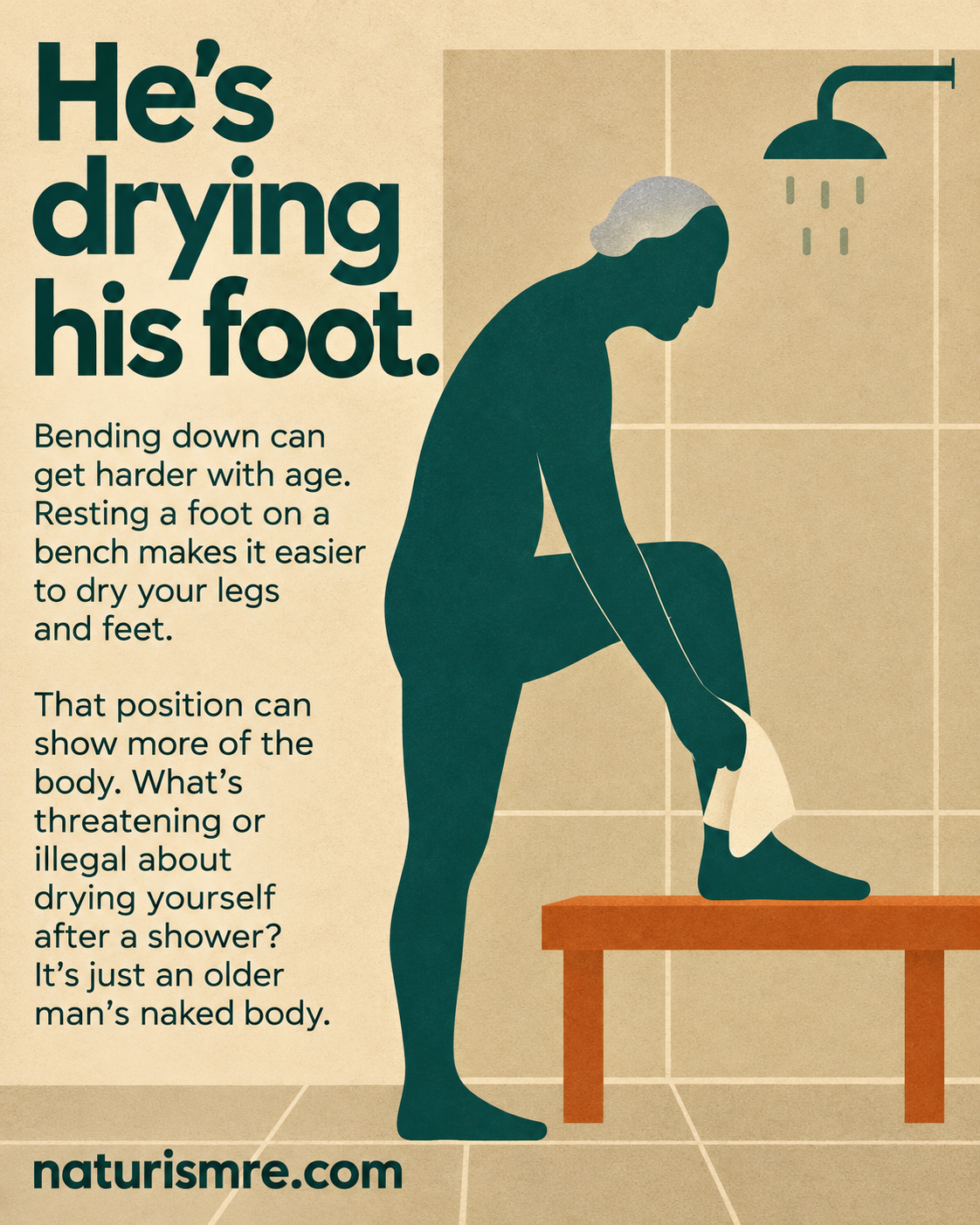
NRE recommends private changing options and recognition of practical mobility needs.NRE recommande des options de change privé et la prise en compte des besoins de mobilité, notamment l'utilisation de bancs.
Will there be public consultation?Une consultation publique est-elle prévue ?
NRE asked whether a draft policy or consultation process would be available. The resolution itself does not establish one.NRE a demandé si un projet de politique ou une consultation seraient proposés. La résolution ne le précise pas.
9. Chronology and public record
9. Chronologie et dossier public
Council adopts Resolution 797
Investigation of signage and review of existing entry conditions and behavioural guidance.
Adoption de la résolution 797
Étude de panneaux et réexamen des conditions d'accès et des règles de comportement existantes.
NRE writes to the Mayor and Council
Five preliminary recommendations and a request for clarification.
NRE écrit au maire et au conseil
Cinq recommandations préliminaires et une demande de précisions.
Formal GIPA application submitted
NRE requests the specific complaint records relied upon for the council decision.
Dépôt de la demande officielle GIPA
NRE sollicite les plaintes précises invoquées à l'appui de la décision municipale.
Automated receipt received
Council acknowledges the email; formal GIPA validation and records remain pending.
Accusé de réception automatique
Le conseil confirme la réception du courriel ; la validation GIPA et les documents restent en attente.
Future correspondence, decisions and document disclosures will be added as dated updates. Original records will remain separately identified.
Les échanges, décisions et documents ultérieurs seront ajoutés avec leurs dates. Les pièces originales resteront clairement identifiées.
10. Sources and related resources
10. Sources et ressources associées
- Canterbury-Bankstown Council minutes, 17 November 2026 (Item 11.9, Resolution 797)Procès-verbal du conseil, 17 novembre 2026 (point 11.9, résolution 797, anglais)
- NRE: Complete Guide to the NICP Act
- NRE Australian institutional outreachDémarches institutionnelles de NRE en Australie
- NRE advocacy and actionActions et plaidoyer de NRE
The Council minutes are the primary source for the adopted decision. The 2GB transcript records public statements, not independent findings about complaints.Le procès-verbal du conseil constitue la source principale concernant la décision. La transcription de 2GB rapporte des déclarations publiques, et non des conclusions indépendantes concernant les plaintes.
Aquatic centre changing-room policy proposals
Three practical draft policy documents addressing personal dignity, child safeguarding, privacy, appropriate conduct, incident response and public signage.
Safe facilities. Respectful behaviour. Clear and proportionate rules.
NaturismRE has prepared this policy package to demonstrate how public aquatic centres can protect children, privacy and personal safety without unnecessarily stigmatising ordinary changing-room nudity.
These proposals build upon the five preliminary recommendations provided to Canterbury-Bankstown Council on 19 November 2026.
Status: These documents are independent NRE proposals, made publicly available for consideration and discussion. They have not been adopted or endorsed by Canterbury-Bankstown Council.
Why these policies are needed
Public aquatic centres accommodate people of different ages, abilities, backgrounds and expectations of privacy.
Changing rooms are specifically provided for changing clothing, showering and personal hygiene. Ordinary nudity may therefore occur as part of their intended use.
At the same time, every visitor has a legitimate interest in personal safety, privacy and respectful behaviour.
The purpose of these proposals is to establish clear distinctions between ordinary activities and genuinely inappropriate conduct, while offering practical safeguards for children, families, older people and people with disabilities.
On 17 November 2026, Canterbury-Bankstown Council adopted Resolution 797 concerning possible signage and a review of behavioural guidelines in shared changing rooms.
NRE contacted Council on 19 November, outlining five preliminary recommendations and requesting clarification of its intentions.
Communal changing-room privacy, dignity and conduct policy
1. Purpose
To provide safe, respectful and accessible changing-room facilities for all aquatic-centre users, including children, families, older people and people with disabilities.
This policy seeks to protect personal privacy and dignity while distinguishing ordinary changing, showering and hygiene activities from inappropriate conduct.
2. Scope
This policy is proposed for application to patrons, staff, contractors and other authorised users of Council-operated aquatic-centre changing rooms, showers and associated amenities.
It would operate alongside existing conditions of entry, child-safeguarding requirements and applicable legislation.
3. General principles
3.1 Ordinary changing-room activities
Changing clothing, showering, drying the body and attending to personal hygiene are normal activities within facilities provided for those purposes.
Incidental nudity during these activities should not, by itself, constitute misconduct.
3.2 Privacy and personal dignity
All patrons should respect the privacy, personal space and dignity of others.
Patrons should avoid unnecessary intrusion into another person's changing or showering activities.
3.3 Behavioural expectations
The following conduct should be expressly prohibited:
- Sexual harassment, sexual activity, voyeurism, intimidation or threatening behaviour.
- Deliberately directing sexualised behaviour towards another person.
- Unauthorised photography, filming or recording within changing rooms and showers.
- Unwanted touching, stalking, bullying or persistent invasion of personal space.
- Conduct placing children or other patrons at risk.
3.4 Children and families
Children should have access to appropriate privacy and safeguarding measures.
Parents and carers should supervise children in accordance with facility rules and their responsibilities.
Council should establish clear arrangements for children requiring assistance, school groups and organised activities.
3.5 Accessibility
Reasonable consideration should be given to patrons who require additional time, seating, assistance or adaptive equipment when changing or showering.
Using a bench to dry one's legs or feet, for example, should not automatically be treated as inappropriate behaviour.
3.6 Private changing options
Council should maintain or progressively introduce private changing cubicles or family facilities where practical.
Patrons should be free to choose these facilities without being required to justify their preference.
4. Application and enforcement
Staff should assess complaints according to the behaviour reported, relevant circumstances and available evidence.
Where appropriate, staff may provide guidance, issue warnings, arrange alternative facilities or take action under existing conditions of entry.
Suspected criminal conduct should be referred to police.
No patron should be presumed to have engaged in misconduct solely because another person observed their unclothed body during ordinary changing-room activities.
5. Review
The policy should be reviewed after six months of operation and annually thereafter.
Reviews should consider complaints, safeguarding outcomes, accessibility, patron feedback and staff experience.
Child safeguarding and changing-room incident-response protocol
1. Objective
To ensure concerns involving children, privacy or inappropriate behaviour are addressed promptly, consistently and without unnecessary assumptions.
2. Preventive safeguards
Council should:
- Provide accessible information explaining expected behaviour and how to report concerns.
- Maintain private changing options where practical.
- Establish appropriate supervision arrangements for organised children's activities.
- Prohibit photography and recording in changing rooms.
- Train relevant staff to recognise grooming, harassment, intimidation and other safeguarding risks.
- Provide clear procedures for assisting children and people with disabilities.
3. Responding to a complaint
- Receive and record. Listen respectfully, establish the immediate concern and record the reported behaviour without presuming guilt.
- Assess immediate safety. Determine whether anyone is at immediate risk. Contact emergency services where necessary.
- Establish relevant circumstances. Distinguish ordinary changing or showering from allegations of harassment, sexual conduct, intimidation or other misconduct.
- Respond proportionately. Provide support, separate involved parties when necessary and apply existing conditions of entry.
- Refer and document. Refer suspected criminal behaviour or child-protection concerns to appropriate authorities. Record actions and protect personal information.
- Review. Assess whether the incident reveals a safeguarding, signage, facility-design or staff-training issue.
4. Child protection
Children reporting uncomfortable, intimidating or inappropriate experiences must be listened to and taken seriously.
Staff should not dismiss a safeguarding concern merely because the reported incident occurred in a changing room.
Equally, the presence of ordinary nudity should not automatically establish that abuse or misconduct occurred.
Responses should be based on circumstances, reported behaviour and applicable child-protection procedures.
5. Reporting
Staff should follow established reporting obligations and NSW child-protection requirements.
Emergency and child protection contacts
Immediate danger: Call 000.
NSW Child Protection Helpline: 132 111.
These contacts supplement, rather than replace, an aquatic centre's established safeguarding and reporting procedures.
6. Accountability
Council should maintain confidential incident records, review recurring issues and use findings to improve safety and facilities.
Incident records should contain information necessary for appropriate assessment and follow-up, without unnecessary collection of intimate personal information or images.
Changing-room signage and implementation guidelines
1. Objective
To communicate clear expectations without suggesting that ordinary changing-room nudity is inherently inappropriate.
2. Proposed entrance signage
The following wording is proposed as a model for shared changing-room entrances.
Respect, privacy and safety
Welcome to our shared changing facilities.
Please respect everyone's privacy and personal space.
Changing, showering and personal hygiene are normal activities in these facilities.
Harassment, intimidation, sexual misconduct, photography and recording are prohibited.
Private changing facilities are available where provided.
3. Supplementary signage
Near private changing facilities
Prefer additional privacy? Private changing facilities are available here.
Near showers
Please respect others' privacy. Use showers and changing areas considerately. Report inappropriate behaviour to staff.
For children and families
Your safety matters. If someone makes you uncomfortable, touches you inappropriately or crosses your boundaries, tell a trusted adult or staff member.
4. Signage to avoid
NRE recommends avoiding general instructions such as:
- "No nudity in changing rooms."
- "Cover yourself at all times."
- "Do not expose your body to children."
Such wording could confuse ordinary hygiene activities with inappropriate conduct and create unnecessary enforcement disputes.
5. Implementation programme
| Stage | Proposed action |
|---|---|
| 1. Review | Examine existing facility rules, complaints and safeguarding procedures. |
| 2. Consultation | Seek input from families, older patrons, disability representatives, aquatic staff and child-safety specialists. |
| 3. Drafting | Finalise conduct rules, signs and incident-response procedures. |
| 4. Training | Brief staff on safeguarding, privacy, accessibility and proportionate intervention. |
| 5. Trial | Introduce guidance at selected facilities. |
| 6. Evaluation | Review complaints, staff feedback and patron experience after three and six months. |
6. Performance measures
Council could assess implementation using the following measures:
- Number and nature of substantiated incidents.
- Response times to reported concerns.
- Accessibility and privacy complaints.
- Staff training completion.
- Patron feedback and reported confidence in facility safety.
The objective should be fewer harmful incidents and clearer expectations, not simply fewer reports of nudity.
Application and next steps
These three documents form a complementary policy package.
The first establishes expectations for everyday changing-room conduct. The second addresses safeguarding, complaints and incident response. The third provides model signage and an implementation pathway.
They are intended to support constructive discussion with councils, aquatic-centre operators, safeguarding specialists and community representatives.
Prepared by NaturismRE on 21 November 2026 as independent draft proposals.
The five preliminary recommendations in NRE's original email to Canterbury-Bankstown Council were sent on 19 November 2026.
The three expanded draft documents published here are separate from that original correspondence. Publication does not imply Council has received, approved or adopted these drafts.