

Legal Foundations, Conceptual Definitions, and Interpretative Boundaries
Examining the fragmented legal structures, contextual interpretation mechanisms, and operational constraints governing naturist systems within contemporary regulatory environments.
The legal viability of naturist systems depends not on redefining nudity itself, but on aligning behaviour, context, and environmental structure with existing legal interpretations, thereby reducing ambiguity and increasing predictability within fragmented regulatory systems.
1.1 The Legal Positioning of Nudity in Contemporary Systems
Across modern legal systems, nudity is not governed by a single, universally consistent principle. It is regulated through fragmented legal constructs typically embedded within public decency laws, disorderly conduct provisions, indecency or obscenity statutes, and local bylaws or administrative regulations.
These frameworks rarely define naturism explicitly. Instead, they regulate observable conduct and perceived impact, resulting in variability across jurisdictions, dependence on context and intent, and inconsistency in enforcement outcomes.
As a result, naturist practice operates within a legally ambiguous space in which permissibility is often inferred rather than clearly codified.
1.2 Distinction Between Nudity, Indecency, and Sexual Conduct
A central legal issue is the distinction between nudity and indecency.
In many jurisdictions, nudity alone is not explicitly defined as unlawful. Legal thresholds are typically triggered by conduct that is interpreted as indecent, offensive, or disruptive.
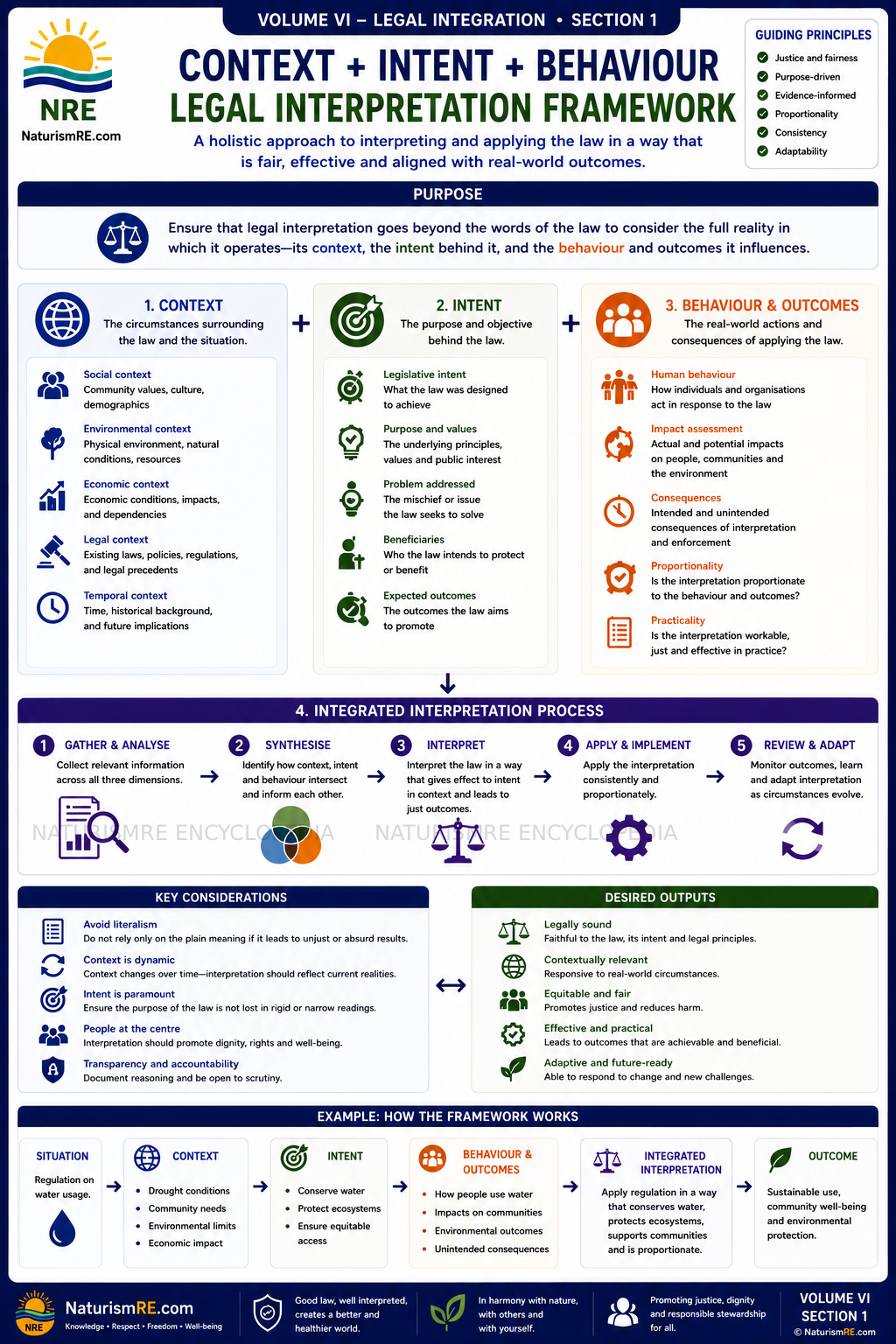
This introduces three critical variables: the physical state of nudity, the behavioural context in which it occurs, and the interpretative impact on observers.
Legal outcomes are determined not by the physical state alone, but by the interaction of these variables. As a result, identical physical conditions may be treated differently depending on behaviour and context.
This reinforces the importance of behavioural clarity and contextual definition in legal interpretation.
1.3 Context-Based Legal Interpretation
Contemporary legal systems increasingly rely on context-based interpretation when assessing conduct.
Relevant factors include location, the presence and nature of observers, environmental purpose, and behavioural consistency with surroundings.
Courts and enforcement bodies may consider whether conduct was intended to offend, whether it deviates from expected norms, and whether it would be perceived as inappropriate by a reasonable observer.
This approach shifts legal assessment from rigid classification toward situational evaluation.
For naturist systems, this implies that clearly defined environments reduce interpretative ambiguity, behavioural consistency strengthens legal defensibility, and poorly defined contexts increase exposure to adverse interpretation.
1.4 Jurisdictional Variability and Legal Fragmentation
Legal treatment of nudity varies significantly across jurisdictions due to differences in statutory definitions, cultural norms, judicial precedent, and enforcement practices.
This variability produces inconsistency in legal outcomes, uncertainty for participants and organisers, and challenges in developing scalable systems.
Variation may include designated areas where nudity is tolerated, jurisdictions where enforcement is discretionary, and regions with strict prohibition regardless of context.
The absence of harmonised frameworks requires naturist systems to remain locally adaptive rather than universally standardised.
1.5 The Role of Intent in Legal Assessment
Intent is a frequently cited factor in legal evaluation, although its application varies between jurisdictions.
Legal systems may consider whether conduct was intended to offend, alarm, or disrupt, and whether behaviour aligns with non-sexual or neutral purposes.
However, intent alone is insufficient. It must be supported by observable behaviour, consistent with environmental context, and interpretable by external observers.
This introduces a practical limitation. Intent that cannot be externally interpreted may not mitigate legal exposure.
Structured naturist environments therefore rely on alignment between intent, behaviour, and context rather than on intent alone.
1.6 Public Versus Private Space Distinction
Legal frameworks commonly distinguish between private and public spaces.
Private environments are generally subject to lower levels of regulation, while public spaces are governed by broader societal standards and expectations.
Naturist practice has traditionally operated within private or controlled environments to reduce legal exposure, maintain predictability, and limit interaction with non-participants.
Expansion into public or semi-public environments introduces increased regulatory scrutiny, interaction with diverse populations, and greater reliance on context-based interpretation.
This distinction defines the gradient of legal risk within naturist systems.
1.7 Enforcement Discretion and Practical Application
In many jurisdictions, enforcement of laws relating to nudity involves a degree of discretion.
Factors influencing enforcement decisions include the presence of complaints, perceived impact on others, local policy priorities, and resource availability.
This results in a gap between theoretical law and practical enforcement. Conduct may be tolerated in practice without being explicitly lawful, and enforcement conditions may vary over time.
Reliance on discretionary tolerance introduces instability, as tolerance does not equate to legal protection.
Structured systems therefore aim to reduce reliance on discretion by operating within clearly interpretable and defensible conditions.
1.8 Analytical Conclusion
The legal foundations of naturist practice are characterised by fragmentation, contextual interpretation, and jurisdictional variability.
Nudity is rarely regulated in isolation, but through broader constructs of indecency and public conduct. Legal outcomes depend on the interaction between physical state, behaviour, and context. Context-based interpretation introduces flexibility while also creating uncertainty. Jurisdictional variability limits the applicability of uniform models. Intent must be externally observable to influence legal assessment. Public space introduces higher levels of scrutiny, and enforcement discretion contributes to unpredictability.
Naturism operates within a legal environment that is not explicitly designed for it. It must therefore be interpreted through existing frameworks rather than governed by dedicated structures.
This establishes a defining principle for Volume VI:
The legal viability of naturist systems depends not on redefining nudity itself, but on aligning behaviour, context, and environmental structure with existing legal interpretations, thereby reducing ambiguity and increasing predictability within fragmented regulatory systems.
Primary Supporting Articles
Legal Definition and the Limits of Regulation: Why Law Alone Cannot Stabilise Naturist Systems
From Legal Principle to Operational Reality, Why Law Requires Structured Environments to Function
Why Legal Clarity Without Operational Context Fails in Practice
Interoperability Between Jurisdictions, Structural Conditions and Limits