

Definitions, Scope, and Interpretative Boundaries
Establishing the definitional, analytical, and classificatory foundation of the NaturismRE Nudism & Naturism Encyclopedia.
Nudity must be interpreted through context, intent, behaviour, consent, applicable boundaries, and perception. It must not be classified through appearance alone.
Nudity
The neutral physical condition of being partially or fully without clothing.
Functional nudity
Nudity arising from a practical activity such as bathing, changing, healthcare, hygiene, or personal care.
Nudismo
The voluntary practice of non-sexual nudity for personal comfort, recreation, relaxation, body acceptance, or social participation.
Naturismo
A broader conscious lifestyle and wellbeing framework that may include nudism while extending into nature connection, body literacy, personal balance, environmental awareness, and respectful living.
1.1 Purpose and Function
This section establishes the definitional, analytical, and classificatory foundation of the NaturismRE Nudism & Naturism Encyclopedia. It defines the principal terms used throughout the work, determines the scope within which analysis is conducted, and establishes the interpretative rules governing all subsequent sections.
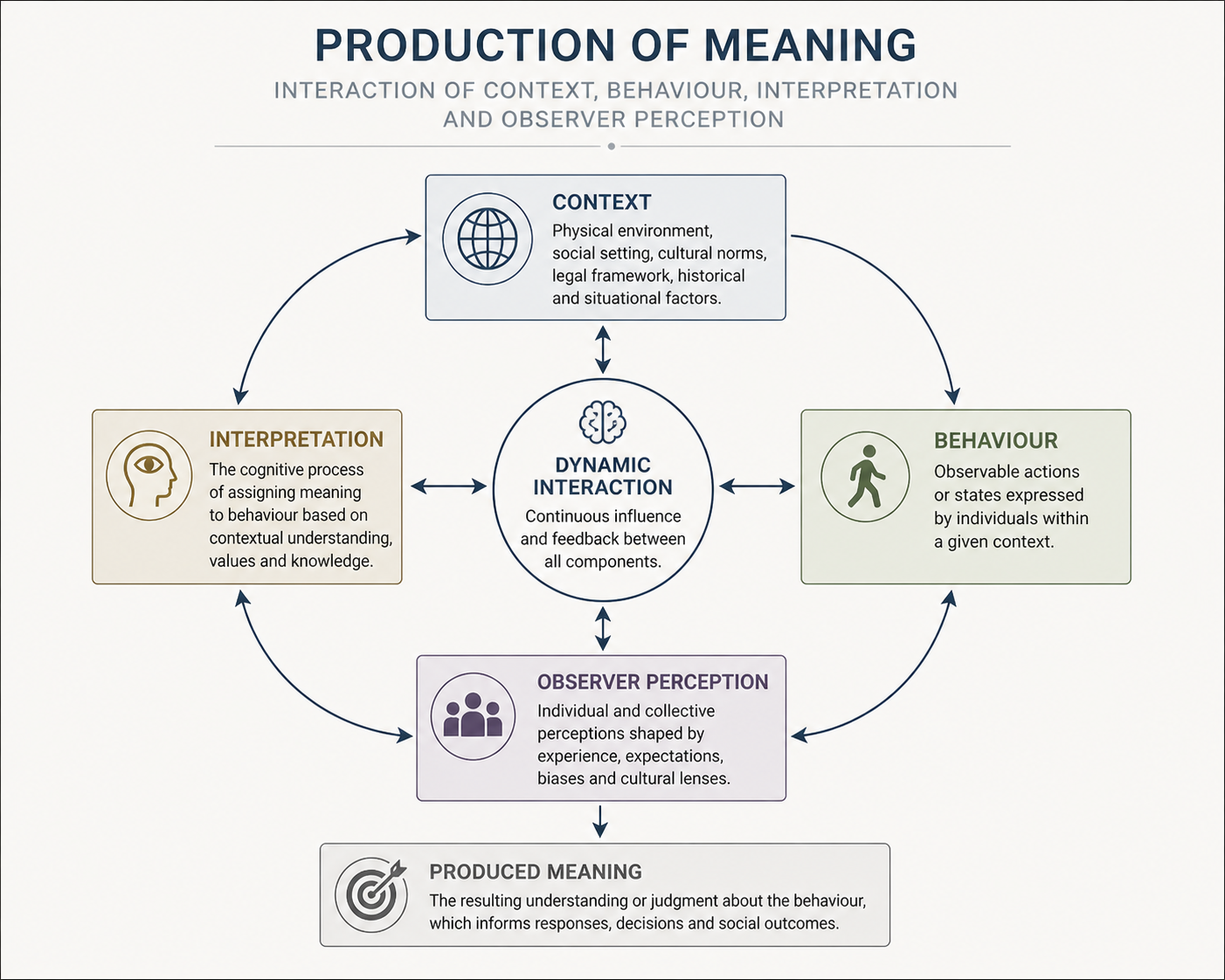
Within this framework, nudity is not treated as a self-explanatory condition. It is recognised as a neutral physical state whose social, legal, cultural, and behavioural meaning is assigned through interpretation.
This section therefore performs three essential functions: it defines key terminology, establishes boundaries between related but distinct phenomena, and sets the governing analytical principles applied throughout the encyclopedia.
1.2 Nudity as a Neutral Physical Condition
For the purposes of this encyclopedia, nudity is defined as the state of being partially or fully without clothing. It is treated as a neutral physical condition.
Nudity does not inherently communicate sexuality, indecency, morality, harm, freedom, ideology, or personal identity. None of these meanings originate from the physical condition itself. They are assigned through legal systems, cultural frameworks, social perception, individual behaviour, and situational context.
This establishes a foundational principle that applies across all volumes: nudity has no single intrinsic social meaning. Meaning is produced through interpretation.
1.3 Functional Nudity
Functional nudity refers to being partially or fully unclothed because a practical activity requires, normally involves, or reasonably permits the removal of clothing.
Examples include bathing, showering, changing clothes, receiving certain forms of healthcare, personal grooming, and other hygiene-related activities.
Functional nudity does not automatically constitute nudism or naturism. The individual is unclothed because of the practical requirements of the activity, not necessarily because they have chosen to engage in a clothes-free recreational practice or adopt a broader naturist framework.
A person who is nude under a shower is experiencing functional nudity. That physical condition does not, by itself, make the person a nudist.
1.4 Social Nudity
Social nudity refers to the voluntary presence of unclothed individuals within a shared environment where participants are mutually aware of the clothes-free context.
Its defining characteristics include voluntary participation, a non-sexual setting, respect for personal boundaries, and the presence of explicit or implicit behavioural expectations.
Social nudity may occur in private homes, gardens, clubs, resorts, campsites, beaches, swimming areas, designated public spaces, or informal clothing-optional environments.
What distinguishes social nudity is not merely the visibility of the body, but the shared understanding that the environment permits or expects non-sexual clothes-free participation.
1.5 Nudism
Nudism refers to the voluntary practice of non-sexual nudity for personal comfort, recreation, relaxation, body acceptance, or ordinary social participation in an appropriate context.
Nudism may be practised individually or socially. It may occur privately, informally, recreationally, or within organised clothing-optional environments. It does not require membership of an organisation, adherence to a philosophy, participation in a group, or the presence of formal governance.
Nudism is primarily activity-based and situational. Its defining feature is the voluntary practice of non-sexual clothes-free living or recreation, rather than the mere physical condition of being unclothed.
Analytical definition
Nudism is the voluntary practice of non-sexual nudity for personal, recreational, or social purposes in an appropriate context.
1.6 Naturism
Naturism refers to a broader conscious lifestyle and wellbeing framework centred on respectful living, connection with nature, body literacy, personal balance, environmental awareness, and freedom from unnecessary clothing.
Naturism may include nudism, social nudity, and clothes-free recreation, but it is not defined solely by any of them. Naturist principles may also be expressed while clothed or minimally clothed depending on climate, culture, law, personal preference, health, setting, and practical necessity.
Structured environments, safeguarding systems, behavioural standards, and governance may support the public or institutional integration of naturism. They are not prerequisites for private, personal, household, solo, rural, or informal naturist participation.
Naturism is not treated as a uniform ideology or belief system requiring endorsement. Individuals may engage with its principles at different levels and for different reasons, including wellbeing, simplicity, body acceptance, environmental connection, personal freedom, or conscious living.
Analytical definition
Naturism is a broader conscious lifestyle and wellbeing framework that may include voluntary non-sexual nudity while extending beyond clothing status into nature connection, body literacy, personal balance, environmental awareness, and respectful living.
1.7 Non-Sexual Nudity
Non-sexual nudity is a central classification within this work. It refers to the unclothed body where the person’s conduct and purpose do not involve sexual activity, coercion, deliberate sexual provocation, or sexual engagement with others.
The non-sexual character of nudity cannot be determined through appearance alone. It must be assessed through behaviour, intent, purpose, consent, setting, interaction, and other relevant contextual conditions.
Observer perception may influence how nudity is socially interpreted, but an observer’s sexualised assumption does not automatically transform non-sexual conduct into sexual conduct.
This leads to a critical analytical rule: non-sexual nudity is classified through conduct and purpose, while its social meaning is interpreted through context and perception.
1.8 Distinction from Sexual Behaviour
A strict analytical boundary is maintained between nudity as a physical condition and sexual conduct as a form of intentional behaviour.
The presence of the unclothed body does not, by itself, constitute sexual activity, indecency, exhibitionism, or harm. Such classifications require consideration of conduct, purpose, consent, impact, and applicable legal thresholds.
This distinction is essential to prevent automatic sexualisation and to avoid replacing evidence-based interpretation with assumptions based solely on appearance.
1.9 Contextual Dependency
Interpretation within this encyclopedia follows a context-sensitive model. Meaning may be influenced by location, environment, legal framework, purpose, behaviour, consent, audience composition, cultural expectations, and governance conditions.
Context does not change the physical body, nor does it independently determine an individual’s intentions. It influences how conduct is understood, classified, accepted, regulated, or contested within a particular environment.
This approach prevents universal classifications from being applied without regard to circumstances. It also allows analysis to remain consistent across legal, health, social, cultural, and institutional domains.
1.10 Analytical Domains
The encyclopedia examines nudity, nudism, and naturism across multiple domains, including legal systems, health and scientific analysis, social systems, economic structures, cultural frameworks, technology, governance, ethics, and public policy.
Each domain applies its own evidentiary and interpretative logic while operating within shared foundational definitions. This allows for cross-domain consistency without reducing complex human and social interactions to a single analytical lens.
1.11 Scope Boundaries
This encyclopedia focuses on non-sexual nudity, nudism, naturism, body acceptance, health-related analysis, social interpretation, law, governance, public policy, education, and institutional development.
It explicitly excludes pornography, sexual services, deliberate sexual display, fetishistic or paraphilic frameworks, non-consensual exposure, voyeurism, coercion, exploitation, and conduct intended to involve unwilling observers in a sexualised interaction.
These exclusions are classificatory rather than moral. Their purpose is to maintain analytical precision by separating phenomena that differ in intent, conduct, consent, risk, and social function.
1.12 Evidence and Method Alignment
All analysis within this work is required to be evidence-informed, context-bound, and appropriate to the domain being examined.
Legal claims must remain aligned with applicable legal authorities and jurisdictional limits. Health claims must remain proportionate to the quality and scope of available scientific evidence. Social and cultural analysis must distinguish observation, interpretation, hypothesis, and established evidence.
Unsupported generalisation is excluded. Conclusions must remain proportionate to the evidence available and limited to the conditions under which that evidence applies.
1.13 Safeguarding Alignment
All content is governed by the safeguarding principles established within Volume I, Section 9. These include consent, age-appropriate boundaries, protection of minors, behavioural standards, privacy, personal autonomy, and the prevention of coercive or exploitative conduct.
Ethical integrity is treated as a non-negotiable condition of analysis. No interpretation of nudism, naturism, freedom, or body acceptance may be used to weaken consent, privacy, safeguarding, or lawful behavioural boundaries.
1.14 Concluding Scope Statement
This section defines the operational boundaries of the entire encyclopedia. It establishes that nudity is a neutral physical condition and that functional nudity arises from practical necessity or ordinary personal activity.
It defines nudism as the voluntary practice of non-sexual nudity for personal, recreational, or social purposes. It defines naturism as a broader conscious lifestyle and wellbeing framework that may include nudism while extending into nature connection, body literacy, personal balance, environmental awareness, and respectful living.
Nudity must not be classified through appearance alone. Its meaning and social interpretation arise through the interaction of context, intent, behaviour, consent, applicable boundaries, and perception.
Governance and structure can improve interpretative stability and support public integration, but they do not determine whether private, solo, or informal nudism and naturism legitimately exist.
All subsequent volumes expand, analyse, and apply this framework across legal, health, social, cultural, economic, technological, ethical, and institutional domains.
Primary Supporting Articles
Defining Naturism, Scope, Boundaries, and Interpretative Framework
Non-Sexual Nudity as a Distinct Behavioural Category, Definition and Limits
Context as the Primary Determinant of Meaning in Naturist Systems
Interpretative Boundaries, How Meaning Is Stabilised in Naturist Systems
Why Context, Not Nudity, Has Always Determined Social Acceptance