

Ethical Frameworks, Human Autonomy, and Boundary Conditions
Examining how ethical frameworks support legitimacy, stability, and long-term viability within evolving naturist systems.
The long-term legitimacy of naturist systems depends on their ability to embed ethical frameworks into operational design, ensuring that autonomy, consent, non-harm, and boundary integrity are consistently maintained across all environments and stages of system evolution.
7.1 Ethics as a Structural Requirement
As naturist systems evolve and scale, ethical considerations transition from implicit assumptions to explicit structural requirements.
Ethics in this context is not an abstract construct. It functions as an operational layer that defines acceptable conduct beyond legal minimums, protects both participants and non-participants, and maintains legitimacy across diverse social contexts.
Legal compliance alone is insufficient. Systems must also demonstrate respect for autonomy, protection from harm, and clarity of boundaries.
Ethical frameworks therefore operate as stability mechanisms, reinforcing trust and long-term viability.
7.2 Autonomy and Voluntary Participation
A foundational ethical principle is individual autonomy.
This requires voluntary participation without coercion, informed awareness of environmental conditions, and the ability to disengage at any time.
Autonomy is compromised where individuals experience pressure to conform, where conditions are unclear or misleading, or where boundaries between participation and non-participation are indistinct.
Structured systems support autonomy through clear entry conditions, absence of implicit obligation, and respect for individual choice regarding level of engagement.
Autonomy is both an ethical requirement and a functional condition for sustained participation.
7.3 Consent and Boundary Recognition
Ethical operation requires clear recognition of consent boundaries, particularly in shared or semi-public environments.
This includes implicit consent of participants within defined zones, absence of imposed exposure on non-participants, and respect for personal and spatial boundaries.
Boundary clarity ensures that participation remains within agreed conditions, interaction does not extend beyond intended scope, and perception of intrusion is minimised.
Failure to maintain boundaries may result in ethical breach, social conflict, and increased legal or reputational risk.
7.4 Non-Harm Principle and Risk Awareness
Ethical systems operate under a principle of non-harm.
This requires avoidance of foreseeable harm to participants, minimisation of adverse impact on others, and alignment with safe environmental conditions.
Non-harm does not require elimination of all risk. It requires awareness of potential harm, proportional mitigation measures, and avoidance of unnecessary exposure.
This principle intersects with duty of care and risk management but remains distinct in its emphasis on ethical responsibility rather than legal obligation.
7.5 Equity, Inclusion, and Access Considerations
Future systems must address equity and inclusion, recognising that individuals experience environments differently due to cultural, psychological, and social factors.
Ethical considerations include ensuring that environments do not exclude or marginalise specific groups, maintaining accessibility where feasible, and recognising variability in comfort levels and engagement.
Inclusion must be balanced with preservation of system integrity and alignment with defined environmental purpose.
Ethical frameworks must therefore support inclusive participation while maintaining operational coherence.
7.6 Ethical Limits of Expansion and Visibility
Scaling and increased visibility introduce ethical constraints.
These include the impact on surrounding communities, potential for unintended exposure, and the balance between openness and respect for differing norms.
Ethical expansion requires maintaining boundaries, avoiding imposition on non-participants, and aligning growth with social tolerance thresholds.
Uncontrolled expansion may generate resistance, undermine legitimacy, and create ethical conflict.
Ethical limits therefore function as constraints that support sustainable development.
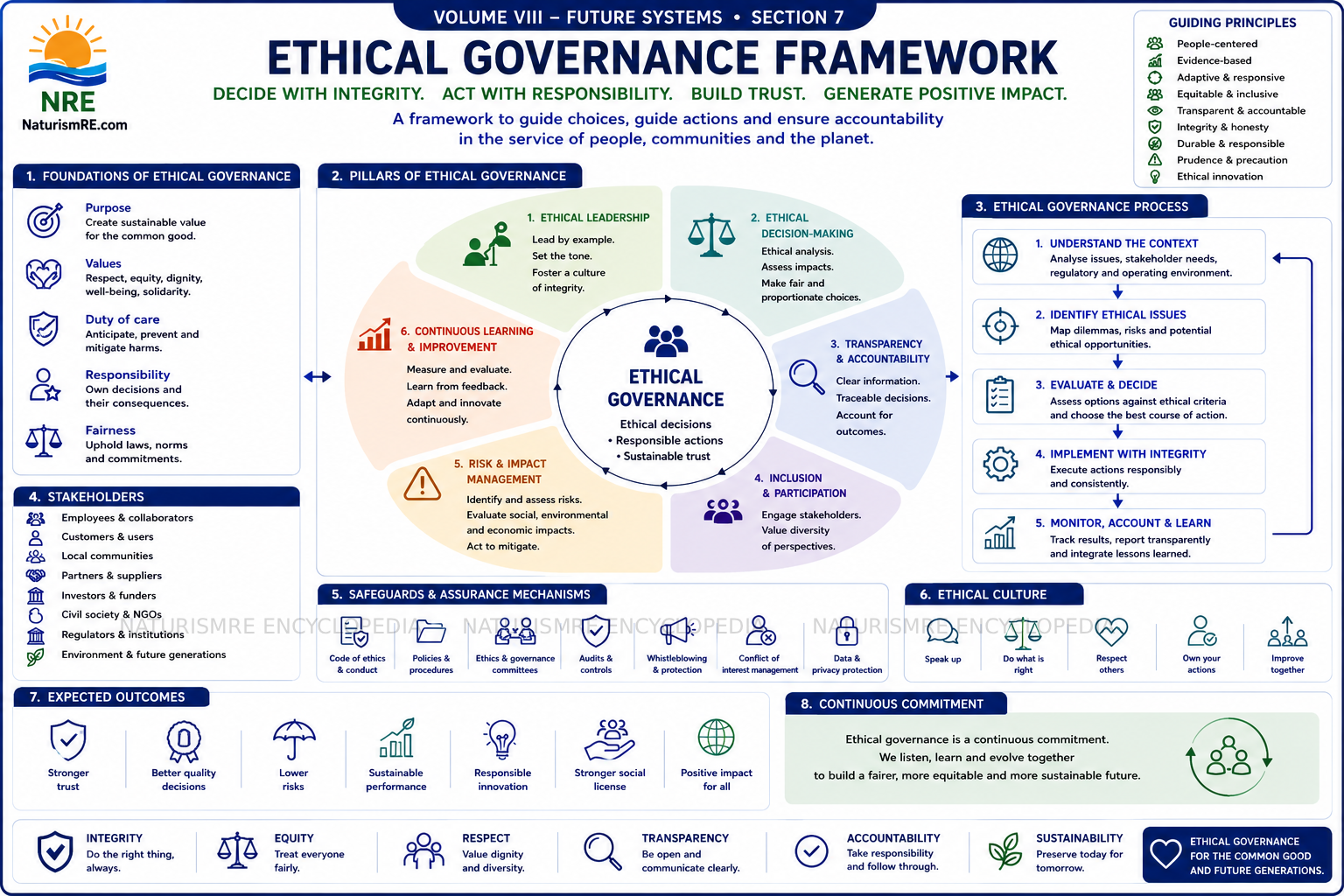
7.7 Governance of Ethical Standards
Ethical principles must be defined, communicated, and reinforced through governance systems.
This includes integration into behavioural standards, inclusion in communication frameworks, and alignment with monitoring and evaluation processes.
Ethical governance ensures consistent application of principles, identification and correction of deviations, and maintenance of system integrity over time.
Without governance, ethical principles remain aspirational and insufficient to support long-term operation.
7.8 Analytical Conclusion
Ethical frameworks are essential to the long-term legitimacy and stability of naturist systems.
Ethics functions as a structural layer complementing legal and operational systems. Autonomy and voluntary participation are foundational requirements. Consent and boundary recognition prevent conflict. Non-harm principles guide risk-aware operation. Equity and inclusion must be balanced with system integrity. Expansion must remain within ethical limits aligned with societal context. Governance mechanisms ensure consistent application of ethical standards.
Naturist systems that endure are those that operate within clearly defined ethical boundaries, maintain alignment between behaviour, context, and impact, and adapt ethical frameworks alongside system evolution.
This establishes a defining principle for Volume VIII:
The long-term legitimacy of naturist systems depends on their ability to embed ethical frameworks into operational design, ensuring that autonomy, consent, non-harm, and boundary integrity are consistently maintained across all environments and stages of system evolution.
Primary Supporting Articles
Why Safeguarding Strengthens With Structure Rather Than Restriction
Why Boundary Enforcement Determines System Credibility
Why Systems Without Defined Exposure Conditions Remain Vulnerable to Conflict
Why Risk Is Lower in Structured Environments Than in Unregulated Contexts
Why Boundary Definition Determines Whether Systems Stabilise or Collapse