Immune System & Inflammation
How clothing influences immune load, inflammation, recovery, and physiological regulation.
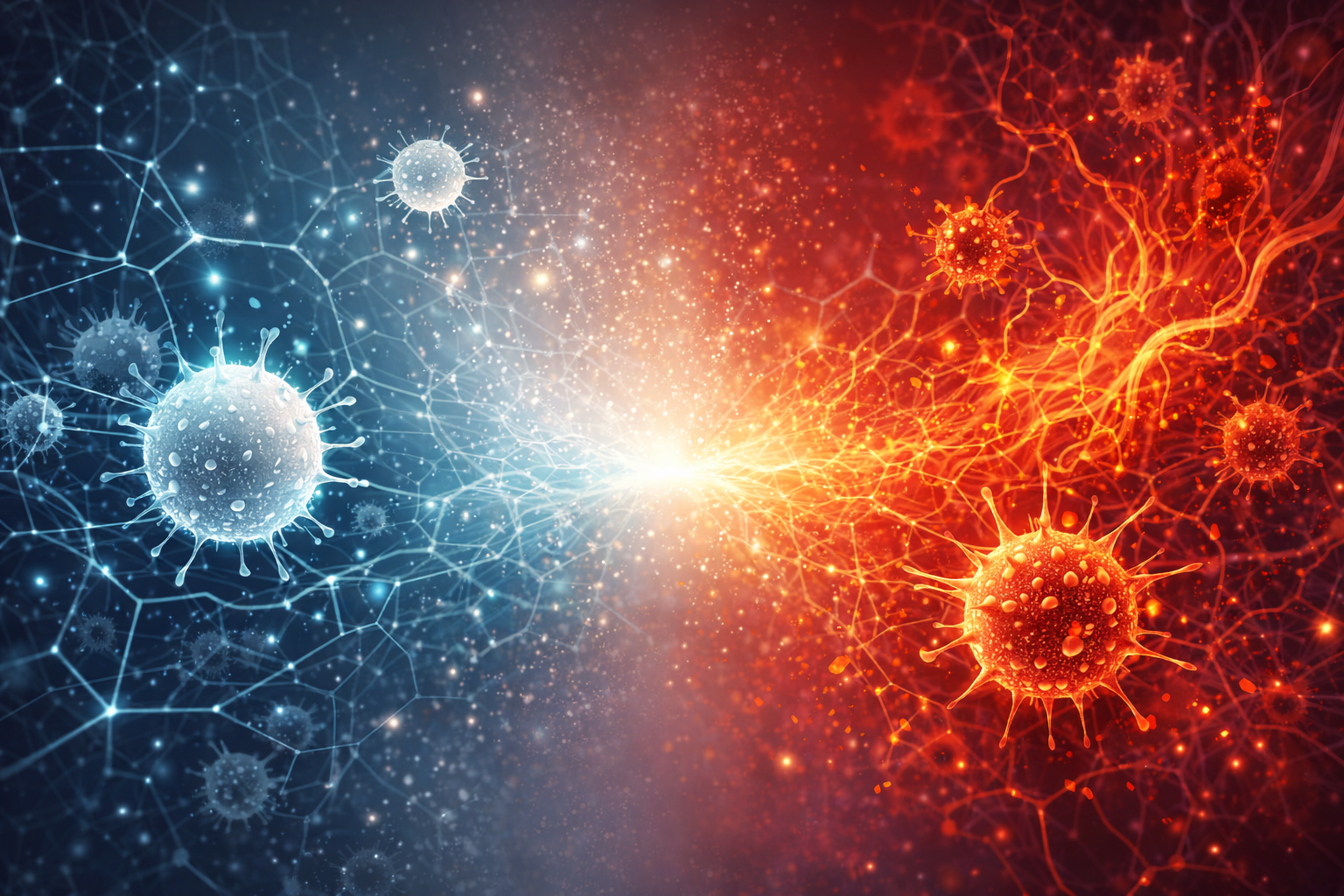
The immune system is shaped not only by pathogens and disease exposure, but also by the environmental conditions the body experiences continuously every day.
How Clothing Influences Immune Load, Regulation & Recovery
The immune system is not a single organ or isolated mechanism. It is a distributed, whole-body network responsible for defence, repair, inflammation regulation, and internal balance.
Its effectiveness depends not only on exposure to pathogens, but on the physical conditions under which the body operates each day.
These conditions include heat load, circulation, sleep quality, tissue irritation, inflammation resolution, and recovery efficiency. Clothing interacts directly with each of these variables.
The Immune System as an Integrated Network
- Immune cells circulating in blood and lymph.
- Lymphatic vessels and lymph nodes.
- Bone marrow and spleen.
- Barrier surfaces such as skin and mucosal tissue.
The immune system’s core functions include:
- Detecting and neutralising pathogens.
- Regulating inflammation.
- Repairing tissue damage.
- Maintaining internal physiological balance.
Immune efficiency is inseparable from thermoregulation, sleep quality, lymphatic flow, skin integrity, circulation, and recovery conditions.
Chronic Low-Grade Inflammation & Modern Environments
Modern environments expose the immune system to continuous low-level stressors rather than acute threats.
- Prolonged sedentary behaviour.
- Heat retention and poor ventilation.
- Sleep disruption.
- Repeated tissue irritation.
Chronic low-grade inflammation increases baseline immune workload, reduces resilience, impairs recovery, and contributes to fatigue and lowered wellbeing.
Heat Retention & Immune Strain
Clothing interferes with the body’s ability to dissipate heat efficiently.
Even mild elevations in body temperature:
- Increase metabolic demand.
- Alter immune cell behaviour.
- Increase inflammatory signalling.
Physiological and occupational research shows that heat stress may suppress certain immune responses while increasing inflammatory markers.
Occlusion, Moisture & Inflammatory Signalling
Tight or poorly ventilated clothing can increase:
- Moisture retention.
- Friction and barrier disruption.
- Local inflammatory signalling.
Even in the absence of infection, irritated tissues generate immune activity that must be regulated and resolved.
Persistent irritation therefore represents continuous immune demand.
Vitamin D & Immune Regulation
Vitamin D influences:
- Immune balance.
- Inflammation regulation.
- Antimicrobial responses.
Skin exposure to sunlight is the body’s primary natural source of vitamin D synthesis.
Clothing significantly reduces skin exposure to ultraviolet radiation and contributes to low vitamin D levels in many modern indoor populations.
Sleep Disruption & Immune Recovery
Immune recovery depends heavily on sleep quality.
Clothing-related factors affecting sleep include:
- Heat retention.
- Restricted movement.
- Pressure and discomfort.
Reducing clothing during rest may improve thermal comfort, sleep continuity, and recovery efficiency.
Inflammation Resolution & Lymphatic Clearance
Efficient inflammation resolution depends on:
- Lymphatic transport.
- Tissue movement and expansion.
- Adequate circulation.
Clothing that increases heat or restricts movement may simultaneously increase inflammatory production while reducing clearance efficiency.
Cumulative Immune Effects
- Persistent low-grade inflammation.
- Slower recovery from illness or exertion.
- Increased fatigue and susceptibility.
- Reduced immune resilience over time.
NaturismRE Position on Immune Health
The evidence-aligned position is this:
Clothing can increase immune workload by contributing to heat stress, inflammation, sleep disruption, and reduced vitamin D synthesis.
Reducing unnecessary clothing constraints, where safe and appropriate, may support immune regulation by lowering avoidable physiological stressors.
Schlussfolgerung
Immune health is shaped by daily conditions, not only by exposure to pathogens.
Heat balance, inflammation levels, sleep quality, and recovery efficiency all influence how effectively the immune system functions.
Clothing is one of the most constant environmental inputs affecting these variables.
NaturismRE positions naturism as a rational, evidence-aligned response to environments that impose continuous and unnecessary physiological strain.
Safe Health Zones (SHZ)
Learn how NRE health principles are applied within structured recovery and wellbeing environments.
Explore SHZNRE-HEALTH Radio™
Listen to calm, evidence-informed health briefings available anytime through the live stream.
Click Here to ListenEnglish Encyclopedia
Explore the English NRE Nudism & Naturism Encyclopedia ecosystem.
Open English EncyclopediaEncyclopédie Française
Découvrez l’écosystème encyclopédique français de NRE consacré au nudisme et au naturisme.
Ouvrir l’Encyclopédie FrançaiseNRE Health Institute Library
Access institutional-grade educational articles, frameworks, research, and wellbeing resources.
Open English LibraryBibliothèque Française du NRE Health Institute
Explore the French-language NRE Health Institute educational and institutional library.
Ouvrir la Bibliothèque Française