Economic Models, Value Systems, and Long-Term Sustainability
Examining how naturist systems achieve long-term sustainability through adaptive economic structures, value alignment, and integration with broader societal and policy frameworks.
The future sustainability of naturist systems depends on the development of adaptive economic models that balance cost, value, and accessibility, ensuring alignment with stakeholder incentives while maintaining operational flexibility across diverse environments.
5.1 Reframing Economic Value in Naturist Systems
Future naturist systems cannot rely solely on traditional, facility-based revenue models. Long-term viability requires a broader understanding of economic value that extends beyond direct financial return.
Economic value in this context includes direct revenue where applicable, indirect economic impact, cost avoidance within public systems, and social or environmental value contributions.
This reframing shifts naturist systems from niche commercial or membership-based activities toward multi-dimensional value systems embedded within broader economic structures.
5.2 Limitations of Traditional Revenue Models
Historically, naturist environments have relied on membership fees, entry charges, and accommodation or service-based income.
While these models provide financial stability within controlled environments and predictable revenue streams, they introduce structural constraints.
These include limited scalability into public or semi-public contexts, dependency on exclusivity or restricted access, and misalignment with broader public or policy objectives.
Such limitations restrict the ability of naturist systems to integrate with public infrastructure, expand into shared environments, and align with community-based or preventive health models.
5.3 Emerging Hybrid Economic Models
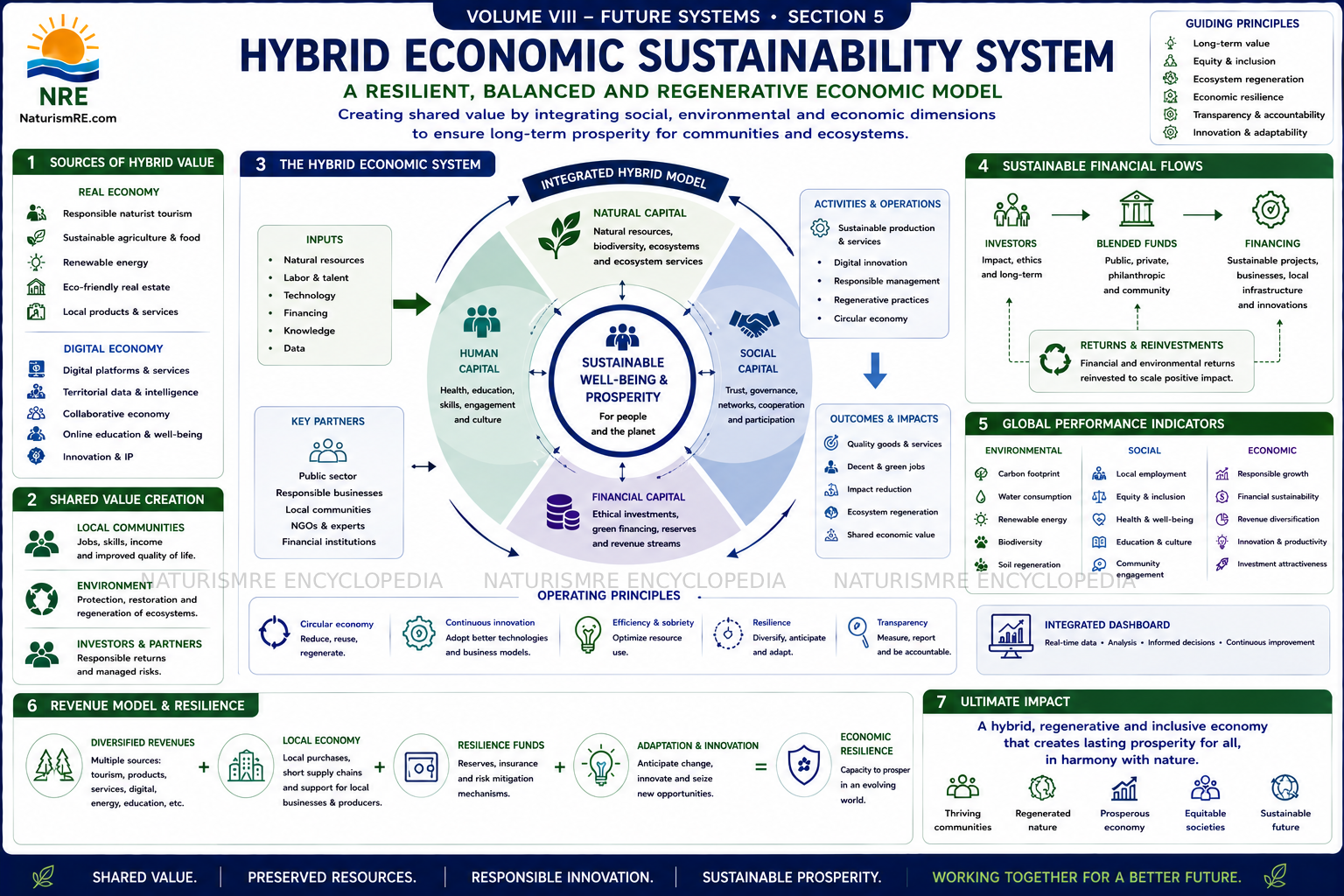
Future systems are likely to adopt hybrid economic models that combine multiple value streams.
Public-Private Integration
Shared investment structures align naturist systems with recreational, health, and urban planning objectives.
Low-Infrastructure Models
Operational systems rely on governance and environmental design rather than high-capital facilities.
Indirect Economic Contribution
Systems generate value through tourism, outdoor activity integration, and associated visitation patterns.
Event-Based Activation
Temporary environments generate periodic revenue while testing operational and economic viability.
These approaches reduce dependence on single revenue streams and increase flexibility.
5.4 Cost Structures and Financial Sustainability
Sustainability depends not only on revenue generation but on effective cost management.
Key cost factors include environmental maintenance, governance and oversight, compliance and risk management, and communication or coordination functions.
Systems with low-cost, high-structure profiles are more likely to achieve operational sustainability, scalability across multiple environments, and resilience to fluctuations in participation.
High-cost models may require continuous revenue streams, introduce financial vulnerability, and limit adaptability.
Effective systems maintain alignment between cost structure and operational scope.
5.5 Economic Legitimacy and Stakeholder Justification
Integration within broader systems requires demonstration of economic legitimacy.
This includes efficient use of resources, observable value creation, and alignment with community or policy objectives.
Stakeholders such as public authorities, local communities, and private partners evaluate environments based on cost-benefit considerations, perceived return on investment, and broader economic impact.
Economic legitimacy supports approval of pilot or permanent environments, allocation of resources, and long-term sustainability.
5.6 Incentive Alignment Across Stakeholders
Sustainable systems require alignment of incentives across stakeholders.
Challenges arise from differing priorities between public and private actors, varying tolerance for financial risk, and potential tension between accessibility and revenue generation.
Alignment is achieved by structuring environments to deliver shared value, ensuring benefits extend beyond direct participants, and balancing revenue objectives with accessibility.
Misalignment may lead to limited support for expansion, operational instability, and reduced stakeholder engagement.
5.7 Scalability and Economic Replication
Economic models must be capable of replication across different contexts.
Scalable systems are characterised by adaptable cost structures, flexible revenue mechanisms, and compatibility with local economic conditions.
Replication requires adjustment to regional capacity, alignment with local demand, and consideration of regulatory and infrastructure constraints.
Models that are overly complex or dependent on specific conditions may fail when transferred to new environments.
5.8 Analytical Conclusion
The long-term sustainability of naturist systems is fundamentally linked to economic structure and value alignment.
Economic value must be understood in multi-dimensional terms. Traditional models provide stability but limit scalability. Hybrid models enable flexibility and broader integration. Cost management is essential for sustainability. Economic legitimacy supports stakeholder acceptance. Incentive alignment is required for stable operation. Scalable models must adapt to diverse economic contexts.
Naturist systems that achieve long-term viability are those that align economic structure with operational design, deliver value beyond direct participation, and integrate with broader economic and policy frameworks.
This establishes a defining principle for Volume VIII:
The future sustainability of naturist systems depends on the development of adaptive economic models that balance cost, value, and accessibility, ensuring alignment with stakeholder incentives while maintaining operational flexibility across diverse environments.