

Key Finding
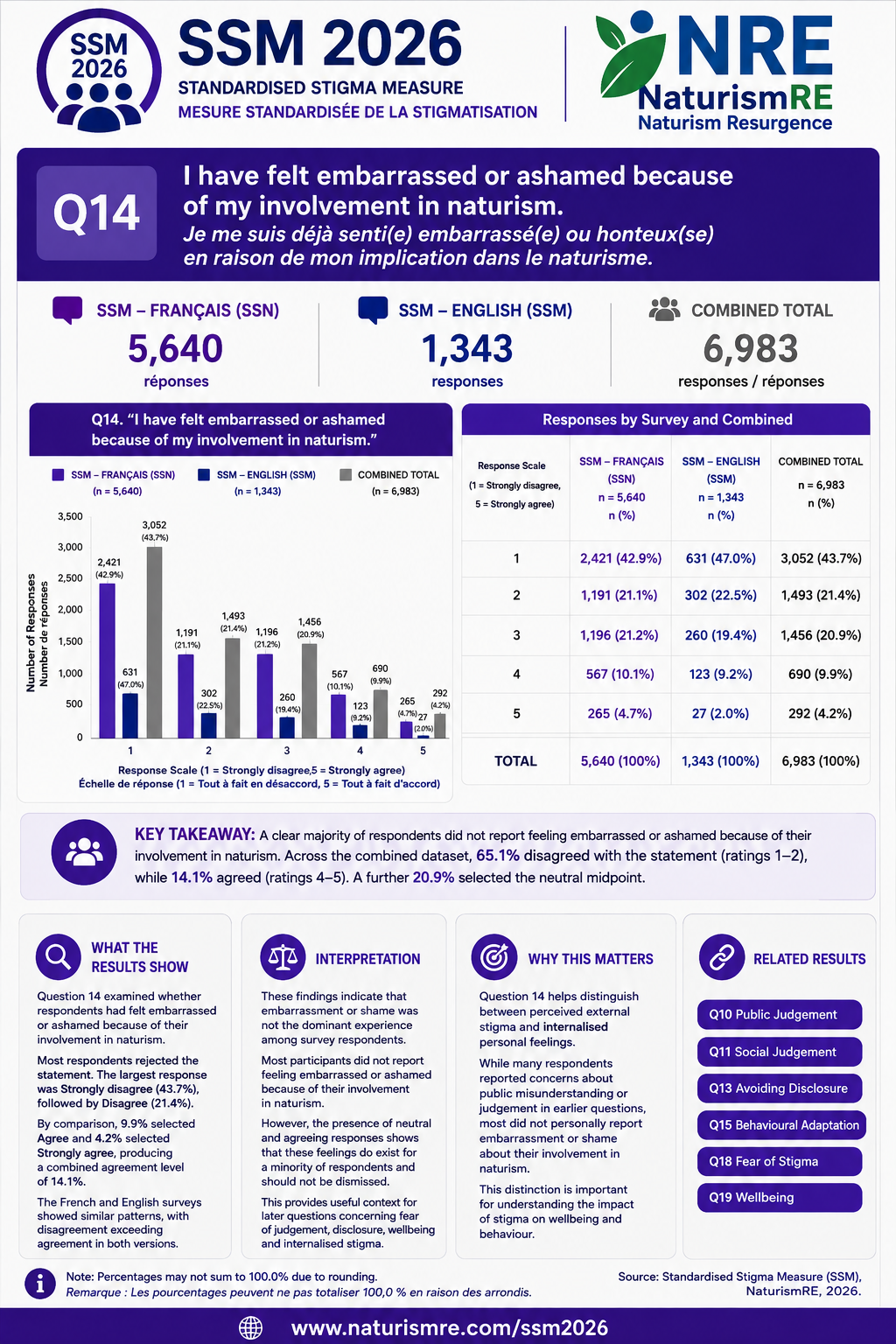
A clear majority of respondents did not report feeling embarrassed or ashamed because of their involvement in naturism. Across the combined dataset, 65.1% disagreed with the statement (ratings 1–2), while 14.1% agreed (ratings 4–5). A further 20.9% selected the neutral midpoint.
What the Results Show
Question 14 examined whether respondents had felt embarrassed or ashamed because of their involvement in naturism. Responses were measured using a five-point agreement scale, where 1 = Strongly disagree and 5 = Strongly agree.
The results show that most respondents rejected the statement. The largest response category was Strongly disagree, selected by 43.7% of respondents. A further 21.4% selected Disagree.
By comparison, 9.9% selected Agree and 4.2% selected Strongly agree, producing a combined agreement level of 14.1%.
The French and English surveys showed similar overall patterns, with disagreement exceeding agreement in both language versions.
Interpretation
These findings indicate that embarrassment or shame was not the dominant experience among survey respondents. Most participants did not report feeling embarrassed or ashamed because of their involvement in naturism.
However, the presence of neutral and agreeing responses shows that these feelings do exist for a minority of respondents and should not be dismissed. This provides useful context for later questions concerning fear of judgement, disclosure, wellbeing and internalised stigma.
Why This Matters
Question 14 helps distinguish between perceived external stigma and internalised personal feelings. While many respondents reported concerns about public misunderstanding or judgement in earlier questions, most did not personally report embarrassment or shame about their involvement in naturism.
Related Results
Key Finding
A clear majority of respondents did not report feeling embarrassed or ashamed because of their involvement in naturism. Across the combined dataset, 65.1% disagreed with the statement (ratings 1–2), while 14.1% agreed (ratings 4–5). A further 20.9% selected the neutral midpoint.
What the Results Show
Question 14 examined whether respondents had felt embarrassed or ashamed because of their involvement in naturism. Responses were measured using a five-point agreement scale, where 1 = Strongly disagree and 5 = Strongly agree.
The results show that most respondents rejected the statement. The largest response category was Strongly disagree, selected by 43.7% of respondents. A further 21.4% selected Disagree.
By comparison, 9.9% selected Agree and 4.2% selected Strongly agree, producing a combined agreement level of 14.1%.
The French and English surveys showed similar overall patterns, with disagreement exceeding agreement in both language versions.
Interpretation
These findings indicate that embarrassment or shame was not the dominant experience among survey respondents. Most participants did not report feeling embarrassed or ashamed because of their involvement in naturism.
However, the presence of neutral and agreeing responses shows that these feelings do exist for a minority of respondents and should not be dismissed. This provides useful context for later questions concerning fear of judgement, disclosure, wellbeing and internalised stigma.
Why This Matters
Question 14 helps distinguish between perceived external stigma and internalised personal feelings. While many respondents reported concerns about public misunderstanding or judgement in earlier questions, most did not personally report embarrassment or shame about their involvement in naturism.